After he returned from his adventures, Ulysses sat by his still hearth wondering what to do next. Getting older includes reflection upon life lessons we've learned and discernment about what comes next, but life is meant to be lived. We have become wiser than we think and we are meant to use the wisdom we've gained. Whether philosophy or observation, discovery or poetry, this is a depository not only for passive thought or memory, but a springboard for action. Life is more than breathing.
Posts
Saturday, March 31, 2018
With Feet Firmly in Both Worlds
I'm confused. I'm a Christian, supposed to be freed by Christ. Then if I'm so free, why do I feel so bound? Bound, as is rooted in the physical world rather than liberated in the spiritual one. Bound. Caught. Confined. Limited. Anything but free.
Being stuck is not my favorite thing. And I'm stuck. But I know not everybody feels like this. I can tell.
Contrary to what my Christian friends sometimes say, people who absolutely don't believe in God don't seem stuck. They're pretty carefree, in fact. And why not? Nobody's judging their every move. They don't have to measure up to much. Just being as nice as the next guy is good enough. It's pretty easy.
And folks just as rooted on the other end, the ones you and I might call saints or seers, well, they live in peace, too. The physical world fades clearly into the background for them. The live pretty much on a spiritual plane unknown to lesser beings. They're happy. Oblivious, sometimes, it seems, but happy.
So it's easy to be ungodly and easy to be holy. But here in the middle--not so much. This is where the tension lives. And this is where we spend most of our time. The middle ground, where both sides tug at us, and we live here. With feet planted firmly in both worlds.
How did I get here? First, there's sin. What have I done wrong and not despised? What does God clearly forbid that still secretly makes me smile? Surely they're not as bad as the letter of God's law dictates. They make good stories, at the very least. What's the big deal? I don't do most of those things anymore. I'm better now. But that doesn't matter. What's wrong is still wrong.
And then, what do I love that clearly belongs to the earth? What pulls on me whose other end has no constructive place in heaven? Animals? My kids? Art or music? The doing of good deeds? Those aren't bad. I mean, even unbelievers help out other folks and love their kids and their dogs, and as much as we do. What I love may even cause me to think of and thank God. But even if they do, they're not God.
I'm thinking that the rationalizations we nurture and emotional and physical ties we retain are the milk of faith. They're presentable on the surface, but they're not helpful. They're the spiritual slack we cut ourselves, and they don't get us where we say we want to go.
If we want full view of God, we have to brush away whatever blocks that view. Somehow, we need to release everything to His care. Cut loose our deluded past and the excuses we make for it. Unleash our confused present and the comfortable talismen with which we block our clear vision.
Take a baby, for instance. Dang, she's cute. The way she smells, the sound she makes, the way she looks into my eyes. But what do I see when I look at her? When I reach for her, am I reaching for God? And if not, how in the world do I look beyond her? She's so there.
But if I do reach for her, and bask in the pleasure she gives, I've stopped short of what I might otherwise have. If I see past her, if I release the moment completely to God, then I miss this feeling, this satisfaction, this fun. But then, if I aim for the pleasure of the baby, what's the difference between that pleasure and any other kind? Is it substantially different from sexual excitement or drug-induced euphoria? Plain pleasure, regardless of its earthly source, ties me to the earth.
Pleasure is a such a lovely stopping place,though. So nice, but not holy. People in all walks of life have had to give up pleasures to get where they so desperately wanted to go. Athletes, artists, folks on a diet. And then there are those looking for even more...missionaries, monks, Jesus Himself. They didn't live in pleasure. Instead, they find their victory amid privation, even misery.
And that has to be our road, too, if we are truly going to throw off the bonds of this world. We have to find what we want among the bones of what we might have had.
You will have trouble in this world.--John 16:33
Let not your heart be troubled. Believe in God. Believe also in me.--John 14:1
No one who puts his hand to the plow and looks back is fit for service in the kingdom of heaven.--Luke 9:62
In the end, we will continue to be bound to either earth or heaven. In order to gain heaven, we have to throw off the bonds of earth, even the ones we love and make us happy. If we want to be free, we have to throw off what ties us to this place. We are given so much. The challenge is to hold it loosely--very loosely, always ready to grasp instead what lasts forever.
image: saatchart.com
Tuesday, March 20, 2018
Why Daniel Didn't Die
The king spake and said to Daniel, O Daniel, servant of the living God, is thy God, whom thou servest continually, able to deliver thee from the lions? Then Daniel said unto the king, O king, live forever. My God hath sent His angel, and hath shut the lion's mouth that they have not hurt me:--Daniel 6:20-22a
Good old Daniel. Don't you just love to hear this story? It pushes all the buttons--that gut-wrenching fear when we are faced with tragedy or trouble or doubt as Daniel is cast into the midst of a pack of hungry beasts all set to tear him limb from limb and lick their lips when they have finished making a meal of him; our admonishment from God to depend on Him, to pray, and to be confident that He will save us or someone we love as Daniel watches the lions approach--their hot, fetid breath, their plate-size paws taking step after step closer; and then the perfect working out of that confidence, God's ultimate rescue when Daniel is spared--our assurance that our prayers, too, will be answered.
But then I hear what Daniel says next:
forasmuch as before Him innocence was found in me: and also before thee, O king, have I done no hurt. --Daniel 6:22b
Wait a minute. Daniel didn't need to be saved. He already was. He was already innocent before God and knew it. Even if he were chewed to bits, he knew he would simply be delivered into eternity and before the Lord he loved. Many of God's children had already done this through the ages. They had died in His service in the arena, at the stake, or beneath the sword. Why should Daniel expect any different? What was different about him?
Well, probably nothing.
So, why, then, did he live?
I suspect it was this, the king's reaction:
I make a decree, that in every dominion of my kingdom men tremble and fear before the God of Daniel: for he is the living God and steadfast forever and His kingdom that which shall not be destroyed, and His dominion shall be even unto the end.--Daniel 6:26
As much as I like the end of this story, the saving of Daniel's life, I don't think that was the result that mattered. God loved Daniel. He'd created him for a purpose, and this was it. Daniel was about to fulfill God's will for him and, in his case, it was to live, to bear witness to His power before the king so that the king would believe.
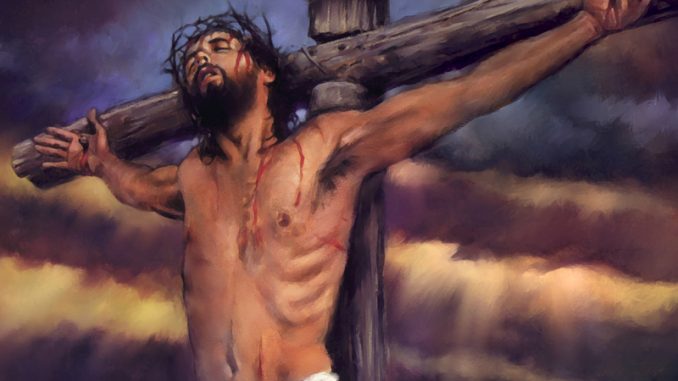
But that's not true for everyone. It is not always the living that draws people to God. God had, and would, and will still sacrifice one life to save another. Remember Jesus? Oh yes, even Him.

Sometimes, it is in the dying that God's will is done. God will, without doubt, continue to either allow sacrifice or spare from it , to grant prayer or to refuse it, in order to produce exactly the result that His intervention with Daniel did: faith and salvation in an unbeliever. That is what God wants more than anything.
God can and does grant our prayers, but not when a greater good is produced by denying them. As believers, we will still die, but God would have even our deaths accomplish something in His kingdom.
This is sovereignty. This is ultimate power over creation. This is what it means to be God. And somehow, even as we bow before Him, we have to understand that we are safe in God's hands--safe not as in the ultimate preservation of either our own flesh or the flesh of someone we love, but in His Everlasting Arms.
photo credits: pinterest.com, cocorioko
Good old Daniel. Don't you just love to hear this story? It pushes all the buttons--that gut-wrenching fear when we are faced with tragedy or trouble or doubt as Daniel is cast into the midst of a pack of hungry beasts all set to tear him limb from limb and lick their lips when they have finished making a meal of him; our admonishment from God to depend on Him, to pray, and to be confident that He will save us or someone we love as Daniel watches the lions approach--their hot, fetid breath, their plate-size paws taking step after step closer; and then the perfect working out of that confidence, God's ultimate rescue when Daniel is spared--our assurance that our prayers, too, will be answered.
But then I hear what Daniel says next:
forasmuch as before Him innocence was found in me: and also before thee, O king, have I done no hurt. --Daniel 6:22b
Wait a minute. Daniel didn't need to be saved. He already was. He was already innocent before God and knew it. Even if he were chewed to bits, he knew he would simply be delivered into eternity and before the Lord he loved. Many of God's children had already done this through the ages. They had died in His service in the arena, at the stake, or beneath the sword. Why should Daniel expect any different? What was different about him?
Well, probably nothing.
So, why, then, did he live?
I suspect it was this, the king's reaction:
I make a decree, that in every dominion of my kingdom men tremble and fear before the God of Daniel: for he is the living God and steadfast forever and His kingdom that which shall not be destroyed, and His dominion shall be even unto the end.--Daniel 6:26
As much as I like the end of this story, the saving of Daniel's life, I don't think that was the result that mattered. God loved Daniel. He'd created him for a purpose, and this was it. Daniel was about to fulfill God's will for him and, in his case, it was to live, to bear witness to His power before the king so that the king would believe.
But that's not true for everyone. It is not always the living that draws people to God. God had, and would, and will still sacrifice one life to save another. Remember Jesus? Oh yes, even Him.

Sometimes, it is in the dying that God's will is done. God will, without doubt, continue to either allow sacrifice or spare from it , to grant prayer or to refuse it, in order to produce exactly the result that His intervention with Daniel did: faith and salvation in an unbeliever. That is what God wants more than anything.
God can and does grant our prayers, but not when a greater good is produced by denying them. As believers, we will still die, but God would have even our deaths accomplish something in His kingdom.
This is sovereignty. This is ultimate power over creation. This is what it means to be God. And somehow, even as we bow before Him, we have to understand that we are safe in God's hands--safe not as in the ultimate preservation of either our own flesh or the flesh of someone we love, but in His Everlasting Arms.
photo credits: pinterest.com, cocorioko
Thursday, November 30, 2017
RIP: Samson and Suicide
We are so sure of ourselves as Christians sometimes, so reliant not only
on the Bible, but on our understanding of it. And some of that's good,
but we keep forgetting that even in studying God's word, that we don't
have God's mind.
When we are faced with a suicide of someone we love, we encounter circumstances that ask us to make new sense of a principle we thought we understood, that it is not within God's will to determine our own end, that our death is God's province and God's alone. But it's not that simple.
This is what I read this morning from the book of Judges:
Samson was, as you know, a consecrated Nazarite from birth. His life was dedicated to God. And he lived with his family among their enemies, the Philistines, godless people with whom the Israelites were not to mix. However, "Samson went down to Timnah, and at Timnah he saw one of the daughters of the Philistines. Then he came up and told his father and mother, 'I saw one of the daughters of the Philistines at Timnah. Now get her for me as wife.' But his father and mother said to him, 'Is there not a woman among the daughters of your relatives, or among all our people, that you must go to take a wife from the uncircumcised Philistines?' But Samson said to his father, 'Get her for me, for she is right in my eyes.'".
Now here's the important part:
"But his father and mother did not know that it was from the Lord, for He was seeking an opportunity against the Philistines."
One sentence. One sentence in that whole story. God prompted Samson to do something forbidden for a reason that only He could understand. Samson didn't understand what was going on. Neither did his parents or anyone else. But God did.
How many times are we cautioned that we do not know the mind of God? Dozens. They didn't then. We don't now.
As far as I'm concerned, we can only do the best we can with the circumstances we are given. But it is only God who is all-knowing, God who is sovereign. We do not, cannot, know what He is doing from first to last.
We say we cannot judge a man's motives, only his action. But we need to remember, too, that God uses even actions that look wrong to us for His own ends. If we trust Him, we have to give Him room to work and not too harshly judge those who, hidden to us, He may have chosen to help Him. .
When we are faced with a suicide of someone we love, we encounter circumstances that ask us to make new sense of a principle we thought we understood, that it is not within God's will to determine our own end, that our death is God's province and God's alone. But it's not that simple.
This is what I read this morning from the book of Judges:
Samson was, as you know, a consecrated Nazarite from birth. His life was dedicated to God. And he lived with his family among their enemies, the Philistines, godless people with whom the Israelites were not to mix. However, "Samson went down to Timnah, and at Timnah he saw one of the daughters of the Philistines. Then he came up and told his father and mother, 'I saw one of the daughters of the Philistines at Timnah. Now get her for me as wife.' But his father and mother said to him, 'Is there not a woman among the daughters of your relatives, or among all our people, that you must go to take a wife from the uncircumcised Philistines?' But Samson said to his father, 'Get her for me, for she is right in my eyes.'".
Now here's the important part:
"But his father and mother did not know that it was from the Lord, for He was seeking an opportunity against the Philistines."
One sentence. One sentence in that whole story. God prompted Samson to do something forbidden for a reason that only He could understand. Samson didn't understand what was going on. Neither did his parents or anyone else. But God did.
How many times are we cautioned that we do not know the mind of God? Dozens. They didn't then. We don't now.
As far as I'm concerned, we can only do the best we can with the circumstances we are given. But it is only God who is all-knowing, God who is sovereign. We do not, cannot, know what He is doing from first to last.
We say we cannot judge a man's motives, only his action. But we need to remember, too, that God uses even actions that look wrong to us for His own ends. If we trust Him, we have to give Him room to work and not too harshly judge those who, hidden to us, He may have chosen to help Him. .
Subscribe to:
Comments (Atom)